 Written by: German Roots Project Editorial Team
Posted on: October 1, 2026
Written by: German Roots Project Editorial Team
Posted on: October 1, 2026
Common Beginner Mistakes in German Genealogy Research
Almost every stalled German genealogy search fails for one of the same handful of reasons. The records exist, the tools exist, and the ancestor is usually findable — the research just took a wrong turn early on and compounded from there. Below are the nine…
 Written by: German Roots Project Editorial Team
Posted on: June 28, 2026
Written by: German Roots Project Editorial Team
Posted on: June 28, 2026
Archion and Matricula: How to Use Germany’s Church Book Portals
Matricula is free and Catholic; Archion is subscription and Protestant. How Germany’s two great church-book portals differ and how to use them well.
 Written by: German Roots Project Editorial Team
Posted on: June 28, 2026
Written by: German Roots Project Editorial Team
Posted on: June 28, 2026
How to Find Your Ancestor’s Village in Germany (Meyers Gazetteer Guide)
German records are local, so the village name is everything. Using the Meyers Gazetteer to pinpoint the place, parish, and registry district.
 Written by: German Roots Project Editorial Team
Posted on: June 28, 2026
Written by: German Roots Project Editorial Team
Posted on: June 28, 2026
German Civil Registration: Standesamt Records Since 1876
From 1876 the Standesamt recorded births, marriages, and deaths in detail. What civil registers contain, the privacy periods, and how to request them.
 Written by: German Roots Project Editorial Team
Posted on: June 28, 2026
Written by: German Roots Project Editorial Team
Posted on: June 28, 2026
Hamburg Passenger Lists: Germany’s Great Emigration Archive
The Hamburg lists (1850–1934) often name the emigrant’s home village — the breakthrough record for finding German origins. How to use them.
 Written by: German Roots Project Editorial Team
Posted on: June 28, 2026
Written by: German Roots Project Editorial Team
Posted on: June 28, 2026
German Emigration Records: Ports, Ships, and Passenger Lists
When Hamburg comes up empty: the lost Bremen lists, other ports, US arrival manifests, and German emigration files — and a strategy for using them.
 Written by: German Roots Project Editorial Team
Posted on: June 28, 2026
Written by: German Roots Project Editorial Team
Posted on: June 28, 2026
How to Read Old German Handwriting: Kurrent and Sütterlin
Kurrent, Sütterlin, and Fraktur explained — and a practical, learnable method for reading the old German script in your church and civil records.
 Written by: German Roots Project Editorial Team
Posted on: June 28, 2026
Written by: German Roots Project Editorial Team
Posted on: June 28, 2026
German Genealogy Glossary: Key Terms Explained
The German and Latin terms, abbreviations, and symbols you meet in church books and civil registers — a quick-reference glossary to keep beside your records.
 Written by: German Roots Project Editorial Team
Posted on: June 28, 2026
Written by: German Roots Project Editorial Team
Posted on: June 28, 2026
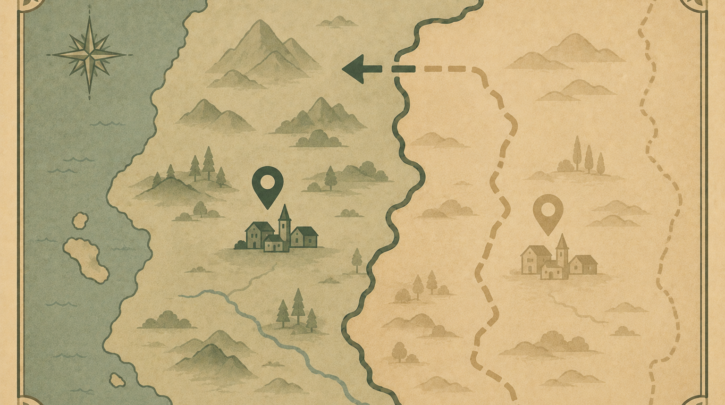
Researching Ancestors from Germany’s Lost Eastern Territories
East Prussia, Silesia, Pomerania, Posen — German lands now in Poland and Russia. Converting renamed places and tracking down the scattered records.
 Written by: German Roots Project Editorial Team
Posted on: June 28, 2026
Written by: German Roots Project Editorial Team
Posted on: June 28, 2026
Why Germans Left: The Emigration Waves From 1683 to the World Wars
From Germantown in 1683 to the great nineteenth-century migration: the waves of German emigration and why knowing yours guides your research.