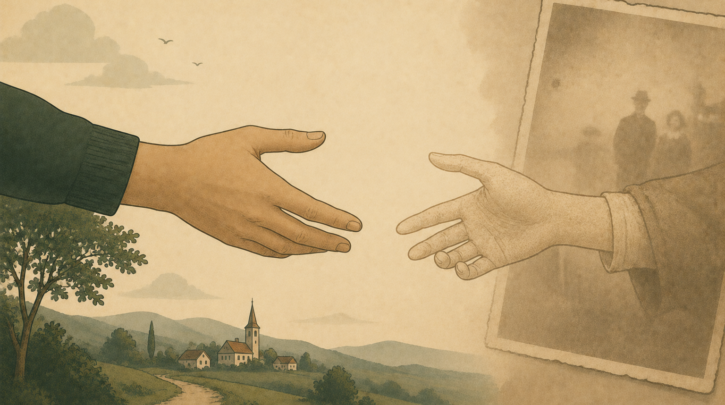

For millions of people whose German ancestors assimilated generations ago, “reclaiming” German heritage is a quiet, growing impulse — a wish to recover the language, the village, the name, and the belonging that an earlier generation set aside. It is more achievable now than ever, because the records survive, the tools are good, and the doors — cultural, genealogical, even legal — are open. Here is how to reclaim your German heritage, in all the ways the word can mean.
Reclaim the story: trace your family
Heritage begins as knowledge. Before you can reclaim anything, you need to know who your ancestors were and where they came from, which is the work of genealogy: gathering what you have, finding the immigrant’s origin, and pinpointing the ancestral village. Our guide to tracing your German ancestry is the place to start, and it is the foundation everything else rests on. You cannot reclaim a heritage you cannot yet name.
Not sure which record to look for first?
Get the German Genealogy Starter Checklist — the ten records to find first, and exactly which database holds each one.
Reclaim the connection: DNA and living relatives
DNA testing can confirm the paper trail and, sometimes, reconnect you with family the generations had lost — both diaspora cousins and, occasionally, relatives still in Germany. Combined with traditional methods, it is a powerful way to turn a documented heritage into living relationships. See finding German relatives with DNA and finding living relatives in Germany for how to go about it.
Reclaim the name
Many German-American families carry an Americanised surname — a Smith that was Schmidt, a Miller that was Müller. Recovering the original form, and understanding what it meant, is a small but resonant act of reclaiming: it restores a thread your family deliberately or quietly cut. For some, learning the name’s meaning and origin is the moment the heritage stops being abstract.
Reclaim the citizenship
For a great many descendants, the most concrete form of reclaiming is legal: German citizenship by descent. If German citizenship passed down your line unbroken, you may already be German and able to confirm it; if your family lost it to historic discrimination or Nazi-era persecution, dedicated pathways may restore it. This is heritage made tangible — an EU passport and a recognised place in the country your ancestors left. Our citizenship by descent guide and the Eligibility Guide show whether a route is open to you.
Reclaim the culture
Heritage also lives in everyday practice, and this part is open to everyone regardless of documents:
- Language: learning even basic German reconnects you to the words your ancestors spoke and unlocks their records;
- Food and tradition: the breads, the Christmas customs, the regional dishes of your family’s homeland;
- Festivals: Oktoberfest, Christmas markets, and the many regional celebrations — in Germany and in German-American communities;
- History: understanding why your ancestors left and the German-American story they became part of.
Reclaim the community
You are far from alone in this. German-American societies, heritage clubs, and cultural centres exist across the United States and beyond, and events like German-American Day on 6 October — marking the founding of Germantown in 1683 — and the long-running Steuben parades celebrate the shared heritage publicly. Sister-city programmes link American towns to German ones, sometimes the very regions families came from. These communities turn a private interest into a living connection.
Reclaim the place: go there
Finally, there is the journey itself — standing in the village, walking through the emigration hall your ancestors waited in, seeing the country with your own eyes. A heritage trip to Germany is, for many, the moment all the research becomes real. Reclaiming your German heritage is not a single act but a path with many doors — and you can open as many of them as you like, starting today with the first one: finding out exactly where your family began.
A path you can walk at any pace
Reclaiming a heritage is not a single decision but a series of doors, and you need not open them all or open them quickly. Some people begin and end with genealogy, content simply to know the story. Others go further into DNA, citizenship, language, or travel, sometimes over many years. There is no correct amount of reclaiming — a person who learns their ancestral village and cooks their great-grandmother’s recipe has reclaimed something real, just as surely as one who obtains a German passport. Start with whichever door calls to you, and let the rest wait until you are ready.
Free trial
Ready to put your research into a family tree?
Start a free MyHeritage trial to build your tree online and search historical records and other family trees as you add each generation.
Reclaiming for the next generation
For many, the deepest motive is not personal but generational: to hand children and grandchildren a heritage that was nearly lost. Documenting the family story, visiting the village together, securing citizenship that descendants can inherit, or simply keeping a tradition alive — each passes the thread forward. A heritage reclaimed is far more durable when it is shared, and children who grow up knowing where their family came from rarely have to “reclaim” it at all.
The emotional side
It is worth acknowledging that this work can stir unexpected feelings — pride, grief for what was lost to assimilation, a sense of connection to people you never met. That emotional dimension is not a distraction from the research; it is often the reason for it. Allow room for it, and let the facts you uncover deepen rather than replace the feeling. Reclaiming a heritage is, in the end, about belonging, and belonging is felt as much as known.
Frequently asked questions
Where should I start if I want to reclaim my German heritage?
With genealogy — specifically, finding your ancestral village through tracing your German ancestry. Everything else, from DNA to citizenship to a heritage trip, builds on knowing who your ancestors were and where they came from.
Do I need German citizenship to reconnect with my heritage?
Not at all. Citizenship is one meaningful path for those eligible, but culture, language, genealogy, community, and travel are open to everyone with German roots, regardless of legal status.
Bringing the threads together
The doors of reclaiming are not separate rooms but a single connected house. The genealogy gives you the village; the village gives meaning to the surname; the surname and DNA help you find living relatives; the documented line may open citizenship; the citizenship and the culture draw you to travel; and the travel deepens the genealogy with new discoveries. People who start with one door often find themselves, years later, having walked through several — not from obligation but because each opened naturally onto the next. That connectedness is what makes reclaiming a heritage so quietly rewarding: every step makes the others richer.
How long does reclaiming a German heritage take?
As long or as little as you wish — there is no finish line. Some learn the family story in a few months; others pursue records, DNA, citizenship, and travel across years. The point is not completion but connection, and even the first step — finding where your family began — is itself a real reclaiming.
Trip starts with the town. Before you book anything, the free German Genealogy Starter Checklist walks you from a family name to the exact village — the one piece of information a heritage trip cannot do without.